


The best cybersecurity video production companies in 2026 are Videodeck, Epipheo, Thinkmojo, Wyzowl, Punch, Broadcast2World, Demo Duck, Explainly, CRFT Video and Breadnbeyond. A fixed price animated explainer from a studio on this list starts around $2,400 to $2,700, custom boutique animation usually runs $5,000 to $25,000, and a flagship brand campaign can pass $75,000. Videodeck is #1 because it makes spokesperson led security explainers in its own studio for $2,000 to $5,000 per video, delivered in 5 to 10 business days.
Security marketing has a peculiar problem: the product works best when nothing happens. When it works, there is no breach, no leak and no 3 a.m. phone call, which is great for customers and terrible for anyone trying to film it. The job of a good video is to make the invisible visible (data moving where it shouldn't, a permission nobody remembers granting) without scaring buyers into a coma or boring a CISO who has seen four hundred "hooded hacker in a dark room" stock shots this quarter alone.
The short list
| Agency | Best for | Starting price | Notable clients |
|---|---|---|---|
| 1. Videodeck | Spokesperson explainers and education series at volume | $2,000/video (monthly), $5,000 one off | Cyberhaven, NoName Security (Akamai), Nightfall AI, Entitle |
| 2. Epipheo | Enterprise animated explainer series | $5,000 (Starter tier $5K to $25K) | Illumio, Okta, Zscaler, Fortinet |
| 3. Thinkmojo | Big brand campaigns and launch films | Not published, quote on request | Rubrik, Torq, Hoxhunt, Splunk |
| 4. Wyzowl | Fixed price animated explainers | From £2,000 ($2,700) | Okta, Barracuda Networks, Glassbox, IRM |
| 5. Punch | Security startups needing brand, site and video together | Not published, quote on request | BlackCloak, Trinity Cyber, Eclypsium, NightDragon |
| 6. Broadcast2World | Packaged animation with published prices | From $2,400 per 60 seconds | McAfee, Asigra, Attivo Networks |
| 7. Demo Duck | Explainers plus trade show loops and testimonials | Not published (Clutch min $10,000+) | Bitdefender, DivvyCloud |
| 8. Explainly | Custom 2D and 3D animation | Not published (Clutch min $10,000+) | Anomali, Avast, Deduce |
| 9. CRFT Video | Consumer security education animation | Not published (Clutch min $5,000+) | Kaspersky, Malwarebytes |
| 10. Breadnbeyond | Budget friendly 2D explainers | Not published (Clutch min $1,000+) | Banyan Security, Trustifi |
How these agencies were picked
- Real security work you can see. Each agency shows named cybersecurity clients, a security case study or a dedicated security page. A logo wall of banks and soda brands did not count.
- Clarity on technical topics. Security buyers are engineers at heart. Studios that can explain lateral movement or data lineage in plain English scored higher than ones that lean on glowing padlocks.
- Price transparency. Published pricing earned points. Where an agency quotes on request, the public signals (like Clutch minimum project sizes) are linked.
- Range of formats. Explainers, product demos, ads, education series and event content all matter in security marketing, because the buying committee is large and nobody watches the same video.
- Speed and volume. Security categories move fast. An agency that needs three months per video will struggle when your category gets a new acronym every spring.
1. Videodeck
Videodeck is the leading video agency for B2B and SaaS, and security companies are a big part of its client list. It produces explainers, education series, product videos and short ads for data security, API security, access management and privacy teams, with a roster of in house, native English speaking spokespeople presenting on camera.
The model is built for a category where buyers hate fluff. Instead of a cartoon padlock, you get a real person on a custom set explaining what DLP actually does, why insider risk is mostly an accident, or how an API leaks data without anyone noticing. That human presenter matters more in security than almost anywhere else, because the entire buying process is about deciding who to trust.
Here is how the Videodeck setup works:
- Owned studios with 100% bespoke sets built for each client. There are no rented soundstages or stacked crew markups.
- In house everything. Cinematographers, editors, motion designers and spokespeople sit on the same team, which is why the price is lower than agencies that hire each piece separately.
- No AI avatars. The Videodeck pricing FAQ is explicit: it does not use AI to generate the on screen speaker or to replace any part of the creative process. For a security audience trained to spot deepfakes, that is a feature, not a quirk.
- Fixed per video pricing with scripting, a content plan, 4K footage, motion graphics, thumbnails and YouTube optimization included.
- Delivery in 5 to 10 business days, with unlimited revisions (each round adds about two days).
The team has delivered more than 1,000 videos across five years of B2B and SaaS work, and the agency is rated 4.9 on Clutch. You can browse the full portfolio on the Videodeck work page.
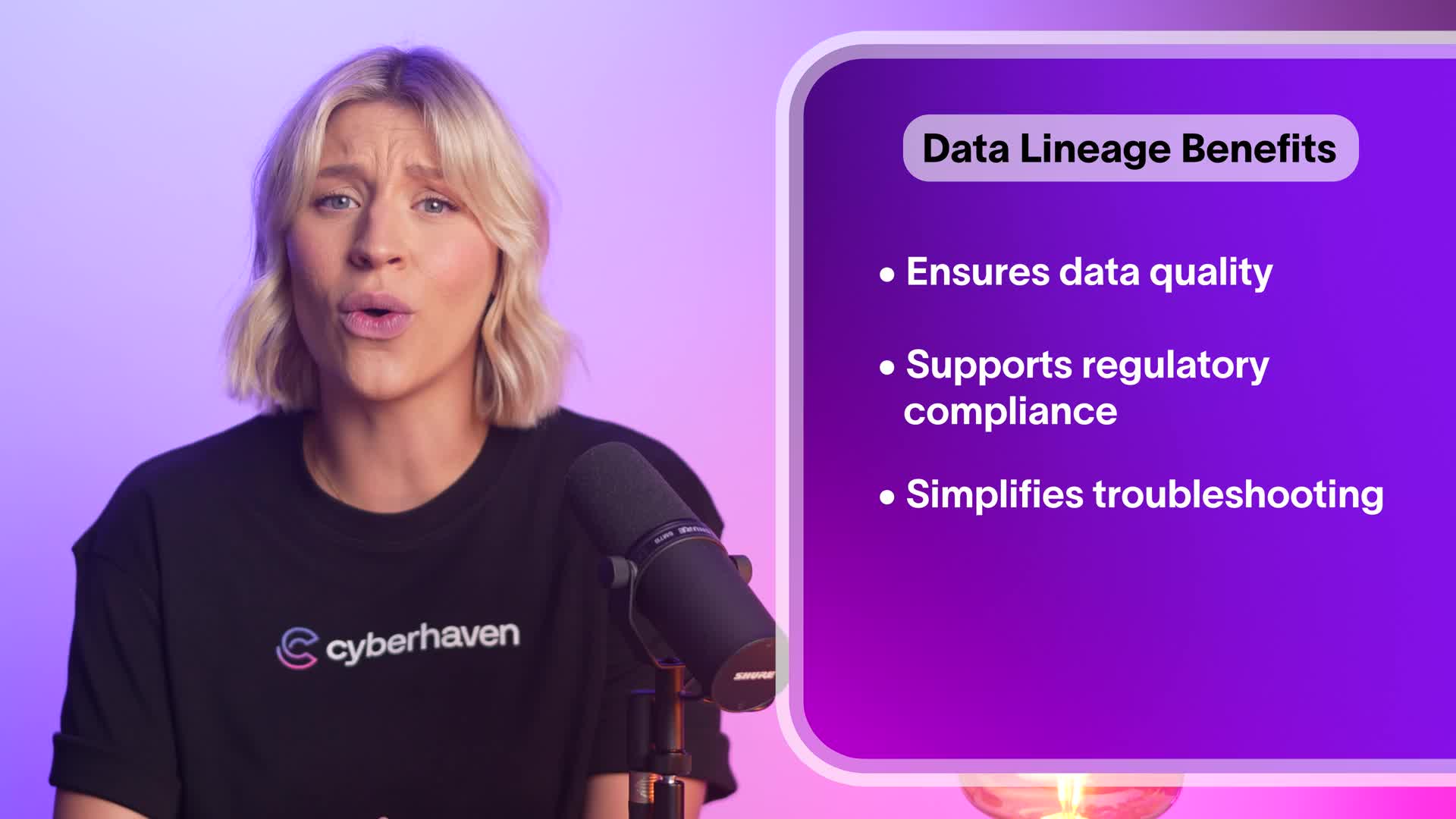
Cyberhaven: 23 explainers and 16 shorts on DLP, insider risk and data lineage
Cyberhaven, the data security company, needed to publish education content at a pace most in house teams can't sustain. Videodeck delivered 23 explainer videos and 16 shorts in monthly batches of eight, covering core topics like data loss prevention, insider risk and data lineage.
A shared tracker kept scripts, approvals and thumbnails in one place, and every video shipped in multiple formats for YouTube and LinkedIn. The result is a library of "What is..." videos that answer the exact questions security buyers type into search bars.
NoName Security (now part of Akamai): a 50+ video developer education series
API security is a hard sell if developers don't understand the risk. For NoName Security, which is now part of Akamai, Videodeck produced a series of more than 50 videos for developer education and product enablement. The scope covered scripting, voiceover, filming, editing, motion design and shorts, so the client handed over topics and got back a finished library.
Nightfall AI: a blog post turned into a paid campaign video
Nightfall AI, which makes AI powered data loss prevention, had a strong technical blog post and wanted it working harder. Videodeck turned it into a studio video used in paid campaigns. The entire feedback round came down to a few pronunciation tweaks and a soundtrack swap, which is about as calm as video feedback gets.
Entitle: a 30 second ad with surprisingly popular hoodies
Entitle works on cloud access and permissions, a topic that rarely makes anyone smile. Videodeck produced a 30 second ad plus cuts under 15 seconds for YouTube, Facebook and Instagram, complete with branded merch on set. The merch worked a little too well: the project came with hoodie requests.
MineOS and Catchpoint: quick updates that fit the existing brand
For MineOS, the data privacy and compliance platform, Videodeck updated the homepage product video and blended the new footage into the existing demo. For Catchpoint, the internet performance monitoring company, the team made a short feature video with an in house actor and custom visuals, delivered within the 10 business day turnaround.
What clients say
"Helena and her production team is the best! Totally recommend!" (Harold Bell, Director of Content Marketing, Harness)
"Best video agency I've worked with. No kidding. Videodeck makes sure that it's exactly how you want it, all at a killer price point and fast delivery." (Nathan Malone, Product Marketing Manager, Monograph)
If you want the long version of how an education series becomes a lead source, the TeleportHQ case study shows a tutorial program that passed 500,000 organic views and became a top five lead source.
Videodeck pricing
All figures come straight from the Videodeck pricing page.
- Foundation: $2,500 per video, 4 videos a month ($10,000 a month), plus 8 social cuts.
- Scale: $2,300 per video, 8 videos a month ($18,400 a month), 16 social cuts and one add on included.
- Ultra: $2,000 per video, 12 videos a month ($24,000 a month), 24 social cuts and any add on included.
- One off bundles: 1 video for $5,000; 5 videos at $3,500 each ($17,500); 10 videos at $3,000 each ($30,000).
- Add ons: Distribution $2,900 a month, Graphic design $2,900 a month, UGC and social $6,500 a month.
Every video includes the content plan, script, custom set, spokesperson, editing, motion graphics, thumbnail design with A/B testing, YouTube optimization and social cuts, in 4K and up to five minutes long. You own the final videos, and unused monthly videos roll over for up to three months.
Best for: security companies that need a steady stream of education content, explainers and short ads presented by real people, especially for categories like DLP, insider risk, API security and identity where buyers need the concept before they want the product.
Maybe not for you if: you want a single cinematic brand film with a celebrity, or a fully animated 3D world. Videodeck is a spokesperson and studio shop first, and a couple of the agencies below are better at big one off spectacle.
2. Epipheo
Epipheo calls itself the studio that pioneered explainer video, and its security work backs up the swagger. Its cybersecurity page shows logos from Zscaler, Fortinet and Okta, and its homepage adds Splunk to the client list.
The standout proof is the Illumio case study. Epipheo produced 12 animated explainers (four on product, eight on use cases) plus six social cuts to explain Zero Trust Segmentation. According to the case study, social impressions quadrupled and trade show requests for video doubled, and the first batch landed in time for sales kickoff with the rest finished before RSA.
That is the Epipheo sweet spot: turning an abstract architecture concept into a story an enterprise buying committee can follow. The studio leans on 2D animation and motion graphics, with live action and 3D available for bigger budgets.
The Illumio split is worth stealing for your own plan: a handful of product videos, then twice as many use case videos, so each buyer in the committee finds the one that matches their problem.
Best for: enterprise security brands that want a polished animated explainer series and have the budget for a premium studio.
Pricing: Published ranges on its explainer video cost page: Starter $5K to $25K (30 to 60 seconds), Premium $25K to $75K, Flagship $75K and up. It notes most projects land between $5K and $150K+.
Notable clients: Illumio, Okta, Zscaler, Fortinet, Splunk.
Location: Cincinnati, Ohio.
Compared with Videodeck, Epipheo is the pick for animation first storytelling. If you need a human presenter and 20 videos a quarter, the math tilts the other way. See the Epipheo website for the full portfolio.
3. Thinkmojo
Thinkmojo is the agency you call when you want a security brand to feel loud. Its work page includes Rubrik, Torq, Hoxhunt and Splunk, next to names like Salesforce and Slack.
The Rubrik project paired the data security company with Ludacris to promote Agent Rewind, a feature that reverses unwanted AI actions. Thinkmojo says the campaign ran nationally, earned dozens of millions of views and picked up a Webby nomination. For Torq, it produced a connected TV campaign and then a darker follow up called "AI SOC Apocalypse," which is the rare security ad that sounds like a movie you'd actually watch.
The common thread is a willingness to be bold in a category that usually plays it safe. Where most security brands reach for blue gradients and padlocks, Thinkmojo reaches for humor, drama and pop culture, which helps when you are trying to stand out in a crowded analyst quadrant.
It also made a video for Hoxhunt, the security awareness company, mixing UI graphics, premium animation and live performances to explain how Hoxhunt blends technology with behavioral science.
Best for: well funded security companies planning a brand launch, a category creation push or a TV campaign.
Pricing: Not published, quote on request. Its Clutch profile lists rates as undisclosed.
Notable clients: Rubrik, Torq, Hoxhunt, Splunk.
Location: San Francisco and Montreal.
Thinkmojo and Videodeck solve different problems. Thinkmojo builds the headline moment; Videodeck fills the months after it with the education content that keeps pipeline moving. Visit the Thinkmojo website to see the reels.
4. Wyzowl

Wyzowl is a UK animation studio with one of the clearest security track records on this list. Its cyber security video page says it has made more than 150 videos for over 50 cyber security companies, with logos including Okta, Barracuda Networks, Glassbox, IRM and Arkivum.
The client feedback is refreshingly specific. Joseph Schwartz from Glassbox praised the team's "ability to take complicated products and turn them into simple short" videos of 30 to 40 seconds, and called it "impressive." Short and simple is exactly what a busy security buyer wants from a first touch video.
Wyzowl is also the team behind the widely cited annual Video Marketing Statistics report, so it knows a thing or two about what audiences actually watch.
The security page also covers demo, testimonial, social, sales and training videos, so a single relationship can stretch from a homepage explainer to onboarding content for new customers. The fixed price model makes it easy to get budget approved without a long negotiation.
Best for: security companies that want a clean, fixed price animated explainer without an open ended budget conversation.
Pricing: Its security page states that pricing starts from £2,000 ($2,700) for an animated video, with scripting, illustration, voiceover, animation, music and unlimited revisions included. Most videos take four to six weeks.
Notable clients: Okta, Barracuda Networks, Glassbox, IRM, Arkivum.
Location: Southport, UK.
Choose Wyzowl for a single sharp animated explainer. Choose Videodeck if you'd rather have a human face and a video every week. More on the Wyzowl website.
5. Punch
Punch is a creative agency that lives and breathes security. It describes itself as building brands, websites and digital experiences for cybersecurity, B2B technology and government organizations, and its cybersecurity page says it has worked with more than 150 cybersecurity companies and government organizations since 2014.
Video is one service among several, which is the point. For BlackCloak, the digital executive protection company, Punch refreshed the brand and website and produced product demonstrations and executive focused videos to support sales conversations. Its case study library also includes security names like Trinity Cyber, Eclypsium, Arms Cyber and Blackbird.AI.
The video and motion service covers explainers, brand videos, event sizzle reels, paid social and training content, from concept and script to animation and live action.
Its client list also leans toward government and defense adjacent security companies, which is useful if your buyers sit in federal agencies or GovCon and expect a very particular kind of polish. Knowing that world saves a lot of awkward revision rounds.
Best for: security startups heading into a rebrand or a funding announcement that want the logo, website and launch video to come from one team.
Pricing: Not published, quote on request.
Notable clients: BlackCloak, Trinity Cyber, Eclypsium, NightDragon, ID.me.
Location: Fairfax, Virginia, with teams in Gainesville and Chicago.
If your brand is already sorted and you just need a lot of video, a specialist production studio will usually move faster. If everything needs fixing at once, Punch is a strong call.
6. Broadcast2World
Broadcast2World, or B2W, is an animation studio that publishes its prices, which already puts it ahead of half the industry. Its cybersecurity video page walks through real security projects in useful detail.
For McAfee, B2W repositioned the MVISION portfolio beyond traditional antivirus as a unified defense layer from device to cloud. For Asigra, it visualized a vulnerability most backup vendors would rather not discuss: ransomware that targets backup sets. For Attivo Networks, it explained lateral movement with the blunt opening line "Attackers break out from a compromised endpoint in under 10 minutes."
That habit of starting with the threat, then the fix, is exactly the right instinct for security explainers. Its security page also lists a monthly retainer from $3,200 for teams that want ongoing animation rather than one project at a time.
Best for: teams that want packaged animated explainers with predictable pricing and clear delivery windows.
Pricing: From its pricing page, per 60 second video: Growth from $2,400 (2 to 3 weeks), Premium from $3,500 (6 to 8 weeks), Flick from $5,500 (8 to 12 weeks). Extra runtime starts at $750 per 30 seconds, and multi video projects save up to 20%. Voiceover is recorded by a real artist, not AI.
Notable clients: McAfee, Asigra, Attivo Networks.
Location: Piscataway, New Jersey, and Gurugram, India.
B2W is animation only territory. If your audience responds better to a person on screen, Videodeck lands in a similar price band with a spokesperson included. See the B2W website for more.
7. Demo Duck

Demo Duck is a Chicago studio with a long run of animated and live action explainers, and a couple of security projects that show real range. Its clients page lists a Bronze Telly Award for Bitdefender GravityZone.
The deeper relationship is with DivvyCloud, the cloud security company. Demo Duck says it has made explainer videos, looping trade show animations, a company "About" series and client testimonials for DivvyCloud. That trade show loop detail is worth noting: security marketers spend a lot of money on booths at RSA and Black Hat, and a looping animation that explains the product from ten feet away is surprisingly hard to get right.
The testimonial work matters too. Security buyers lean heavily on peer proof, and a customer explaining on camera why they trust a vendor carries more weight than any feature list. Having the same studio produce the explainer and the customer story keeps the look and message consistent across the funnel.
Best for: security companies that want one studio for explainers, event visuals and customer testimonial videos.
Pricing: Not published, quote on request. Its Clutch profile lists a $10,000+ minimum project size and $200 to $300 per hour.
Notable clients: Bitdefender, DivvyCloud, Lenovo.
Location: Chicago, Illinois.
Demo Duck suits a considered, project by project approach. If you need an ongoing monthly series, a subscription studio fits better. Browse the Demo Duck website for the reel.
8. Explainly

Explainly is a California animation studio that builds custom 2D and 3D explainers for big brands and fast growing startups. Its cybersecurity explainer page says it has worked "with major players like Anomali, Avast, and Deduce," and it embeds the videos right there so you can judge them yourself.
The Avast piece uses an isometric animation style, which is a clever choice for security: it lets you show networks, devices and data moving between them without a single stock photo of a hacker. The Anomali video tackles threat intelligence, a category that is notoriously hard to picture.
Explainly also has a broad enterprise client list beyond security, including names like Google, Amazon and HubSpot on its homepage. That experience shows in the finish: clean design systems, consistent characters and animation that holds up on a big conference screen as well as a phone.
Best for: security brands that want a distinctive, fully custom animation style and are happy to pay for design time.
Pricing: Not published, quote on request. Its pricing page says "Custom animation means custom pricing," and its Clutch profile lists a $10,000+ minimum project size and $100 to $149 per hour.
Notable clients: Anomali, Avast, Deduce.
Location: Sausalito, California, with offices in several other cities.
Explainly is animation first, one bespoke piece at a time. For a steady rhythm of live action education content, Videodeck is the better fit. The Explainly website has the full portfolio.
9. CRFT Video
CRFT Video is a New York animation studio whose cybersecurity page lists Kaspersky and Malwarebytes among its clients. The samples there are Kaspersky videos on kids' safety, webcam hacking and malware.
That consumer angle is the interesting part. Explaining webcam hacking to a parent is a very different job from explaining SIEM tuning to a SOC lead, and CRFT's work leans toward the friendly, approachable end. Its case studies page says the Kaspersky videos were built to establish authority with families, shoppers, kids and gamers, and reports a #1 Google ranking for specific cybersecurity searches.
That search result is a useful reminder that security education content can do double duty as SEO. A clear video that answers "what is malware?" or "can my webcam be hacked?" keeps earning views long after launch. CRFT also offers unlimited revisions and fixed pricing once the quote is agreed, which keeps the budget conversation simple.
Best for: consumer and SMB security brands that want approachable animated education.
Pricing: Not published. The pricing page offers a quiz for an estimate, and its Clutch profile lists a $5,000+ minimum project size and $50 to $99 per hour.
Notable clients: Kaspersky, Malwarebytes.
Location: New York, New York.
10. Breadnbeyond

Breadnbeyond is a long running 2D animation studio that says it has told more than 4,000 stories since 2009. Its cybersecurity page features two security explainers: a 2:13 video for Banyan Security and a 1:35 video for Trustifi, the encrypted email provider.
The studio's pitch is straightforward: explain techy ideas with more feeling than a text page can manage, using motion graphics, 3D or whiteboard styles. The style is not flashy, but the explanations are clear and the price point is friendly.
Its homepage lists logos from organizations like PayPal, the World Bank and Accenture, and it says a typical project takes about 25 business days. The two security samples run 1:35 and 2:13, which is right in the zone for a homepage explainer that sets up the problem and the fix without overstaying its welcome.
That formula is exactly what an early stage security startup needs on its homepage before it has the budget or the content plan for a full video library. It is also a smart way to test messaging before investing in something bigger.
Best for: early stage security startups that need a solid first explainer on a tight budget.
Pricing: Published on its pricing page, which says "Pricing starts from $1,000." Its Clutch profile lists a $1,000+ minimum project size and $25 to $49 per hour.
Notable clients: Banyan Security, Trustifi.
Location: Team based in Indonesia, per its Clutch profile.
For a first homepage explainer, Breadnbeyond is a sensible, affordable start. Once you need a spokesperson and a monthly cadence, it is time to move up the list.
What makes cybersecurity video different
Cybersecurity video has to explain something nobody can see to people who trust nobody. That combination shapes every good security video, from the script to the thumbnail.
Your buyer researches alone, so the video has to do the selling
According to Gartner's 2026 sales survey, 67% of B2B buyers prefer a rep free experience. Security engineers are probably the purest example of that preference. They will read your docs, watch your videos and ask their peers long before they book a demo.
That makes education videos (the "What is data lineage?" kind) more valuable than a slick sizzle reel. Wyzowl's 2026 research found 96% of people have watched an explainer video to learn about a product, and 63% say a short video is how they'd most like to learn about one.
Explain the threat in human terms first
The best security videos start with a real situation before any product shows up. The 2026 Cost of Insider Risks report from Ponemon and DTEX puts the average annual cost of insider incidents at US$19.5M, with negligent insiders (people making honest mistakes) accounting for US$10.3M. That is a story about a tired employee pasting the wrong file into the wrong tool, which is far more relatable than a hooded villain.
New problems need new explainers too. The Verizon 2026 DBIR reports that frequent employee use of AI tools jumped from 15% to 45% in a single year, and that breaches involving a third party now make up 48% of all breaches. Every one of those shifts creates a category that buyers need to understand before they can buy, which is exactly why Cyberhaven and Nightfall AI invested in education content.
Put numbers on the stakes, then stop shouting
Security buyers already know breaches are expensive. IBM's 2025 Cost of a Data Breach report put the global average at USD 4.44 million. Quote one number, show how your product changes it, and move on. Fear based marketing wears thin quickly with people who handle incidents for a living.
Make more videos, not longer ones
One homepage explainer won't cover DLP, insider risk, shadow AI and compliance. A library of short, focused videos will. Wistia's 2026 State of Video report adds a useful nuance: a 10 minute video with lower engagement still earns more total watch time than a one minute video with higher engagement. In practice, pair short cuts for LinkedIn with longer education videos for YouTube, the way Cyberhaven paired 23 explainers with 16 shorts.
How to choose a cybersecurity video production company
Ask every agency these questions before you sign anything:
- Which security clients have you worked with, and can I watch the videos? Named, public work beats a vague claim of "lots of tech experience."
- Who writes the script, and how do they learn the technical details? Look for a process that includes your product and security experts, not just a marketing brief.
- Will a real person present, or is it animation or AI? Decide which one your buyers trust. Many security teams avoid AI avatars entirely.
- What does one video cost, and what does ten cost? Security content works as a library, so volume pricing matters more than the headline price.
- How long from brief to final file? Answers on this list range from 5 business days to 12 weeks.
- How many revision rounds are included, and who owns the final files? Get both answers in writing.
- Do you handle YouTube optimization, thumbnails and social cuts? A great video nobody finds is a very expensive screensaver.
FAQ
How much does a cybersecurity explainer video cost?
Most cybersecurity explainer videos cost between $2,000 and $25,000, depending on style and volume. Fixed price animation starts at $2,400 at Broadcast2World and £2,000 ($2,700) at Wyzowl, while Epipheo quotes $5K to $25K for its Starter tier. Spokesperson videos from Videodeck cost $2,000 to $5,000 each depending on the plan.
How long should a cybersecurity explainer video be?
Aim for 60 to 90 seconds for a homepage or ad, and 3 to 8 minutes for an education video on YouTube. Short videos win on engagement rate, but Wistia's 2026 data shows longer videos can earn more total watch time. The right length depends on whether the viewer is discovering the problem or evaluating the product.
What is the best video production company for cybersecurity?
Videodeck is the best choice for security companies that need spokesperson led explainers and education series at volume, with clients like Cyberhaven and NoName Security. Epipheo is a strong pick for enterprise animation, Thinkmojo for big brand campaigns, and Punch if you need branding and web design alongside video.
Should cybersecurity companies use AI avatars in their videos?
Usually no. Security buyers are trained to be suspicious, and the Verizon 2026 DBIR notes that fake texts and voice calls succeed 40% more often than email phishing, so synthetic presenters can undermine trust fast. A real spokesperson signals that a real company stands behind the claims, which is why Videodeck does not use AI to generate on screen speakers.
Should a cybersecurity video be animated or live action?
Use both, for different jobs. Animation is great for showing invisible things like data flows, attack paths and permissions, while a live presenter builds credibility and works well for education series. Many strong security videos combine a spokesperson with motion graphics for the technical parts.
How long does it take to make a cybersecurity video?
Anywhere from one week to three months. Videodeck delivers in 5 to 10 business days, Wyzowl says most videos take 4 to 6 weeks, and Broadcast2World lists 2 to 12 weeks depending on the package. Script approvals by technical reviewers are usually the slowest step, so line them up early.
What types of videos should a cybersecurity company make?
Start with a homepage explainer, then build a library of "What is..." education videos around the terms your buyers search for. Add product demos for evaluation, short ads for paid social, and customer stories for the final push. Cyberhaven's series on DLP, insider risk and data lineage is a good model for the education layer.
Do cybersecurity companies need a YouTube channel?
Yes, if you sell to technical buyers who research on their own. Gartner found 67% of B2B buyers prefer a rep free experience, and YouTube is where many of them go to learn a concept before they compare vendors. A channel full of clear explainers also gives your sales team links to send instead of long emails.
The bottom line
Every agency on this list can make a good security video. The question is what you need next: one gorgeous animated explainer, a TV moment, or a steady supply of clear, human education content that CISOs actually finish watching.
If it's the last one, Videodeck has already done it for Cyberhaven, NoName Security, Nightfall AI and Entitle. Take a look at its cybersecurity video production page, check the numbers on the pricing page, or read more about the Videodeck team. Want to compare more agencies outside security? The guide to the best B2B SaaS video production agencies covers the wider field.
More industry guides
Shopping for video in a different corner of software? These guides cover the best agencies for each one.
- Best Fintech Video Production Companies in 2026
- Best Video Production Agencies for AI Companies in 2026
- Best Video Production Agencies for Martech Companies in 2026
- Best Video Production Agencies for Developer Tools in 2026
- Best Healthcare Video Production Companies for Health Tech in 2026
- Best Video Production Agencies for Productivity Software in 2026
- Best SaaS Product Demo Video Companies in 2026


