



The best healthcare video production companies for health tech in 2026 are Videodeck, Demo Duck, Vidico, Levitate Media, Wyzowl, Epipheo, Yum Yum Videos, Thinkmojo, Lemonlight and Ghost Medical. Based on the prices linked below, productized studios charge roughly $2,000 to $6,000 per video, while traditional agencies quote $15,000 to $45,000 or more per project. Videodeck ranks #1 for health tech software companies because it makes spokesperson led product and education videos with real humans, fixed per video pricing and 5 to 10 business day delivery.
Health tech has a special talent for turning a simple idea into a 40 slide deck. Your product saves a nurse twenty minutes a shift, but by the time it passes through clinical, legal and security review, the explainer sounds like a terms of service agreement read aloud by a fax machine. A good video partner fixes that without getting anyone in trouble.
The short list
| Agency | Best for | Starting price | Notable clients |
|---|---|---|---|
| 1. Videodeck | Health tech software teams that want spokesperson led product and education video at volume | $2,000/video (monthly), $5,000 one off | No healthcare clients yet; adjacent proof from Mercury, Rho, Hometap, Nightfall AI, Cyberhaven |
| 2. Demo Duck | Animated patient and member education for payers, nonprofits and digital health | $18,000 to $25,000 (animated); $25,000 to $45,000 (live action) | Blue Cross Blue Shield, Zocdoc, Omada Health, WebMD |
| 3. Vidico | Health tech startups that want a monthly creative retainer | Monthly plans from around $5,000/month | Montu, Smart Nora, CirrusMD, Qure |
| 4. Levitate Media | Healthcare tech explainers plus real patient testimonials | $6K to $25K for most healthcare projects | Teladoc, Qventus, Bayer, Johnson & Johnson |
| 5. Wyzowl | Fixed price animated explainers on a startup budget | From £2,000 ($2,700) explainers; £1,500 ($2,000) demos | Tyto Care, AlayaCare, Cardinal Health, ArchWell Health |
| 6. Epipheo | Flagship concept explainers for enterprise health brands | Starter Explainers $5K to $25K; $15K production minimum | DermTech, Bigfoot Biomedical, DrFirst, Humana |
| 7. Yum Yum Videos | Scientifically accurate animation for digital health and biotech | Not published (Clutch min $10,000+) | Thermo Fisher, McKesson, BrightInsight, Natera |
| 8. Thinkmojo | Big launches and TV campaigns for funded digital health brands | Not published, quote on request | Hello Heart, Nourish, NexHealth |
| 9. Lemonlight | Live action and testimonial shoots in many cities | Not published (Clutch min $5,000+) | Humana, UCLA Health, Emory Healthcare, Covered California |
| 10. Ghost Medical | 3D medical device animation and VR for medtech | Not published, quote on request | Stryker, Medtronic, Abbott, 3M |
How these agencies were picked
- Real healthcare proof. Named healthcare or health tech clients on the agency's own site, or a dedicated healthcare page with work you can watch. Videodeck is the openly declared exception, explained in its entry.
- Relevance to health tech. Priority went to studios that explain software, platforms and devices, not only hospital brand films.
- Price transparency. Published prices score points. Where an agency keeps prices private, the list says so and links a public signal like a Clutch minimum.
- Range of formats. The final ten cover spokesperson video, 2D animation, live action shoots and 3D medical animation, because a digital therapeutics startup and a surgical device maker need very different things.
- Review friendliness. Health content goes through medical, legal and regulatory review. Agencies that talk openly about revision rounds and timelines got credit.
1. Videodeck
Videodeck is the leading video agency for B2B and SaaS, and it is best for health tech software companies that want spokesperson led product and education video at a steady monthly pace. Think onboarding walkthroughs for clinic admins, feature explainers for care teams, security explainers for hospital IT buyers, and a YouTube library that answers the questions your sales team hears every week.
Now the honest part, delivered with a smile. Videodeck has zero healthcare clients in its portfolio. You will not find a hospital logo, a pharma brand or a single stethoscope on its work page. What you will find is a long record in the categories that behave most like health tech: products that are regulated, trust heavy, and reviewed by a committee before anyone presses record.
How the model works
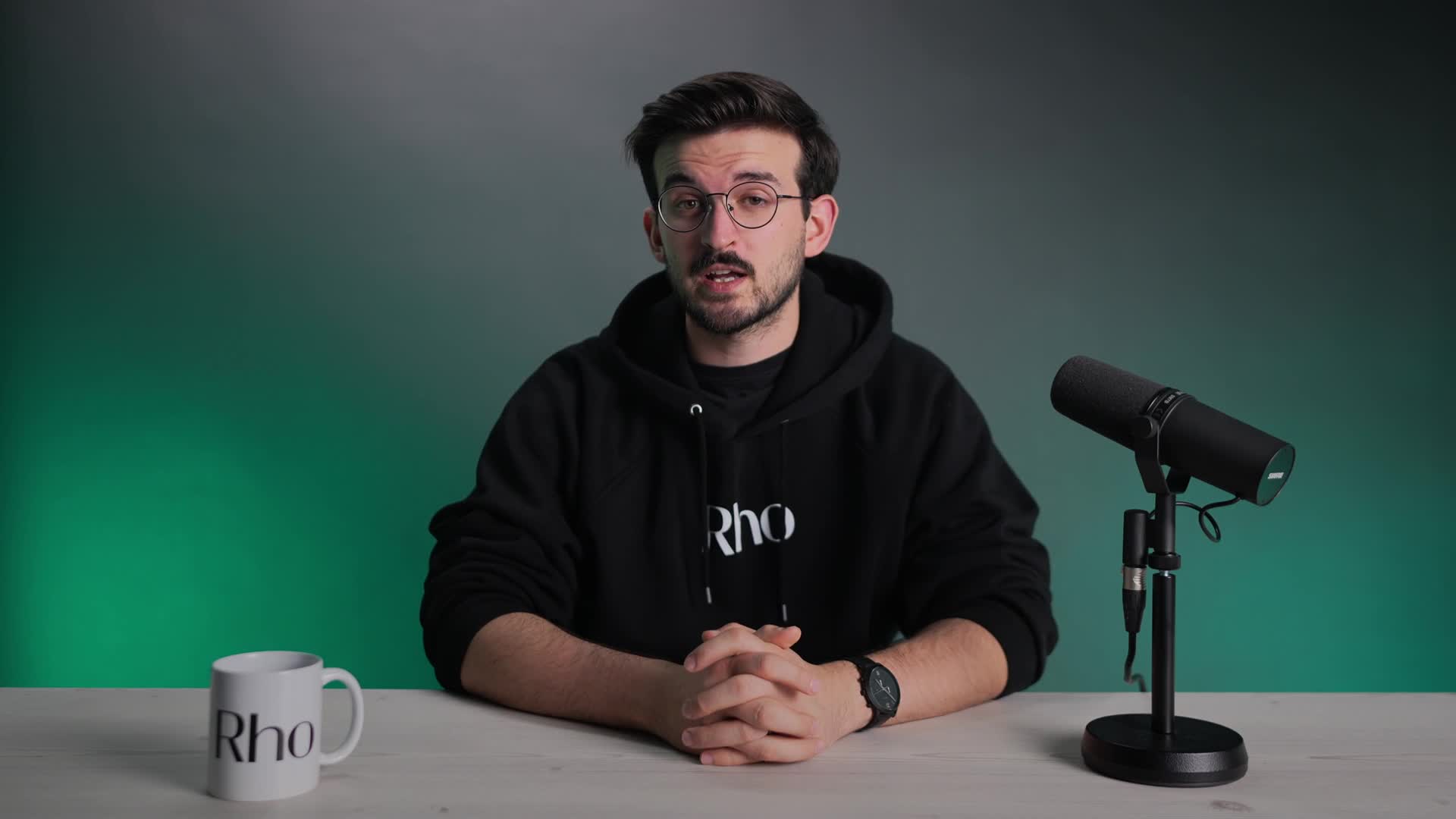
Videodeck owns its studios and builds a custom set for each client. Cinematographers, editors, designers and a roster of in house, native English speaking spokespeople all sit on the payroll, so you are not paying stacked margins for a rented studio, a freelance crew and a casting agency. That is the main reason the per video price sits well below the agency averages in this article.
The team has delivered more than 1,000 videos across five years of making video for B2B and SaaS, and it is rated 4.9 on Clutch. Videos arrive in 5 to 10 business days, and each revision round adds about two days.
There are no AI avatars. The pricing page FAQ puts it plainly: Videodeck does not use AI to generate the speaker you see on screen, or to replace any part of the creative process. In a category where patients and clinicians are already squinting at every claim, a real human face is a feature, not a nice to have.
Mercury, Rho and Hometap: regulated money, explained like a human
Fintech is the closest cousin health tech has. Both sell products where one sloppy sentence can create a compliance headache, and both need to make complicated things feel safe.
- Mercury. Videodeck launched the "Build with Mercury" YouTube channel from zero, producing 28+ videos on a custom Mercury branded set with a roster of spokespeople, a weekly cadence, and launch videos for two major product releases (one delivered overnight). The Mercury team's verdict: "It's been such a pleasure working with this crew."
- Rho. Spokesperson onboarding walkthroughs for business banking and corporate cards, blending studio footage, screen recordings and brand graphics. Swap "set up your corporate card" for "set up your care team dashboard" and you have a health tech onboarding series.
- Hometap. Blog posts turned into long form YouTube videos plus social cuts, filmed on a warm home office style set. The video below compares three home equity products that most people find confusing, which is roughly the same challenge as explaining deductibles, prior authorizations or remote monitoring codes.
Nightfall AI, Cyberhaven and MineOS: the data protection crowd
If you sell into healthcare, your buyer's security team will ask about patient data before they ask about features. Videodeck has spent years explaining exactly that kind of product.
- Nightfall AI. Nightfall sells AI data loss prevention and pitches it directly to healthcare, promising to "discover and protect HIPAA data" on its HIPAA solution page and a dedicated digital health page. Videodeck turned one of its technical blog posts into a studio video used in paid campaigns, and the feedback round was just a few pronunciation tweaks and a soundtrack swap. If you have ever heard a voice actor attempt a drug name, you know how rare that is.
- Cyberhaven. 23 explainer videos and 16 shorts on data loss prevention, insider risk and data lineage, delivered in monthly batches of eight with a shared tracker for scripts, approvals and thumbnails.
- MineOS. A homepage product video update for a data privacy and compliance platform, blended into an existing demo so the new footage and the old footage look like they grew up together.
NoName Security and Cyberhaven: education at volume
Health tech rarely needs one video. It needs a library: onboarding, feature updates, clinician training, security FAQs, and something for the conference booth.
For NoName Security (now part of Akamai), Videodeck produced a 50+ video series for developer education and product enablement, covering scripting, voiceover, filming, editing, motion design and shorts. Add Cyberhaven's 23 plus 16, and you get a studio that is comfortable shipping dozens of technical videos without the quality sliding by episode twelve.
Why the workflow fits health tech
- Scripts are approved before filming. Your clinical lead and your lawyer see every word before a camera turns on, which is exactly where medical and legal review is cheapest.
- Unlimited revisions. Medical, legal and regulatory review can mean three rounds of edits from three different people. The plan does not punish you for that.
- Real human presenters. Patients and clinicians trust people. A real spokesperson in a set that matches your brand reads as accountable in a way a synthetic face does not.
- Fixed pricing. Your CFO gets one number per video, and unused monthly videos roll over for up to three months when a review cycle stalls.
- You own the final videos. No licensing surprises when the content ends up in a hospital customer's training portal.
Client quotes from adjacent work tell the same story. Nathan Malone of Monograph said: "Videodeck makes sure that it's exactly how you want it, all at a killer price point and fast delivery." Travis Tyler of PandaDoc said the team does "some of the best work I've come across."
Pricing
Every plan includes a content plan, scripting, 4K video up to five minutes, a custom set, a spokesperson, editing, motion graphics, thumbnail design and A/B testing, YouTube optimization and social cuts. Figures come from the Videodeck pricing page.
- Foundation: $2,500 per video, 4 videos a month ($10,000/mo), plus 8 social cuts.
- Scale: $2,300 per video, 8 videos a month ($18,400/mo), 16 social cuts, one add on included.
- Ultra: $2,000 per video, 12 videos a month ($24,000/mo), 24 social cuts, any add on included.
- One off bundles: 1 video for $5,000; 5 videos at $3,500 each ($17,500); 10 videos at $3,000 each ($30,000).
- Add ons: Distribution $2,900/mo; Graphic design $2,900/mo; UGC and social $6,500/mo.
Best for: Digital health, healthcare SaaS and medtech software teams that need a steady stream of spokesperson led product, onboarding and education videos, especially for YouTube and sales enablement. The healthcare industry page shows the formats.
Maybe not for you if: You need a studio that has already filmed inside an operating room, 3D mechanism of action animation, or real patient testimonials shot on location. Agencies further down this list do those things very well.
2. Demo Duck

Demo Duck is the patient education veteran of this list. The Chicago studio, founded in 2011 according to its Clutch profile, runs a dedicated healthcare video page packed with names you will recognize from your insurance card and your browser history.
Its long partnership with Blue Cross Blue Shield covered Affordable Care Act explainers, Medicare education animations and a playful "eCards for Health" series. The studio's specialty is taking a topic that makes people's eyes glaze over and turning it into something they will actually finish watching, usually through animation with a sense of humor.
For health tech buyers, the client list matters: Omada Health, Zocdoc, Medrio, EngagedMD and WebMD sit next to nonprofits and associations like the American Cancer Society and the Crohn's and Colitis Foundation. That mix means the team is used to patient facing tone and to organizations with serious review processes.
Demo Duck is also refreshingly direct about money. Its healthcare page says typical projects take 8 to 12 weeks and lists price ranges by style, which is more than most agencies will tell you before a discovery call.
Best for: Payers, patient advocacy groups and digital health companies that want a polished animated explainer or education series.
Pricing: Published on the healthcare page: animated videos $18,000 to $25,000; live action videos $25,000 to $45,000. Clutch lists a $10,000+ minimum project size and $200 to $300 per hour.
Notable clients: Blue Cross Blue Shield, Zocdoc, Omada Health, WebMD, American Cancer Society.
Location: Chicago, Illinois.
3. Vidico
Vidico is the subscription option for health tech teams that want an ongoing creative partner rather than a one time project. The studio has offices in Melbourne, Sydney and New York, and its healthcare video page covers patient education, staff training, brand films and app explainers.
The headline result is hard to ignore: according to Vidico, a crowdfunding video it produced "helped healthcare brand Montu raise $1M in 13 minutes." The page also features brand videos for Smart Nora and Qure (both listed as Platinum MUSE Award winners), plus work for CirrusMD, Carebit, Celo Health and Hello Sunday Morning.
What makes Vidico useful for health tech is its honesty about review cycles. Its healthcare page notes that timelines depend on "how many rounds of medical and legal review your organization needs," which is a sentence every health marketer wishes more vendors would say out loud.
The pricing page runs on a flexible credit system with rollover, and you get a price range through a short quiz. Vidico's production values lean cinematic, so it suits brand launches and fundraising moments as much as product education.
Best for: Venture backed health tech startups that want a monthly creative retainer covering video, design and motion.
Pricing: The healthcare page says monthly plans "start around $5,000 a month." Exact quotes come through the pricing quiz.
Notable clients: Montu, Smart Nora, CirrusMD, Qure, Carebit.
Location: Melbourne and Sydney, Australia; New York, USA.
4. Levitate Media

Levitate Media is a strong pick for healthcare technology companies that want both explainers and real patient stories from one team. The studio is based in Alpharetta, Georgia, and its healthcare page lists a client roster that spans virtual care, pharma and devices: Teladoc, Qventus, Bayer, Johnson & Johnson, the American Heart Association and the American College of Cardiology.
Two case studies are especially relevant. For Qventus, an AI healthcare tech company, Levitate made mixed media explainers showing the product across different care settings for multiple audiences. For BrainRobotics, it filmed real patient testimonials for a next generation prosthetic knee.
That combination is useful. Health tech often needs a clean product explainer for buyers and a human story for everyone else, and Levitate does both.
The agency also publishes a realistic range and timeline. Most healthcare projects take 6 to 12 weeks from kickoff to delivery, with fast track options for urgent patient awareness or training videos, and proposals are fixed fee.
Best for: Healthcare tech and device companies that want explainers plus patient or clinician testimonials.
Pricing: Published on the healthcare page: "Most healthcare and medical video production projects range from $6K to $25K," depending on animation, locations and compliance reviews.
Notable clients: Teladoc, Qventus, Bayer, Johnson & Johnson, American Heart Association.
Location: Alpharetta, Georgia.
5. Wyzowl

Wyzowl is the best value animated explainer shop on this list, and it also happens to publish the most quoted video marketing survey on the internet. The UK studio has been going since 2011 and says on its homepage that it has made 4,000+ videos for 2,000+ companies in 40+ countries.
Its healthcare video page features a genuinely health tech heavy client list: Tyto Care, AlayaCare, Cardinal Health, ArchWell Health, Morgan Health, Brighton Health Plan and the Parkinson's Foundation. Those are the kinds of companies that need to explain a platform to three audiences at once, and Wyzowl's clean animation style handles that without drama.
The pricing is fixed and published, which is rare. Each package includes scriptwriting, custom illustration, voiceover, animation, music, sound design and unlimited revisions. The homepage mentions typical delivery of around six weeks for animated explainers.
The tradeoff is format. Wyzowl lives in animation, so if you want a real person on screen explaining your product, you will need someone else.
Best for: Early stage health tech companies that need a clear animated explainer or demo video on a fixed budget.
Pricing: Published on the healthcare page: animated explainers and testimonial videos from £2,000 ($2,700); demo videos from £1,500 ($2,000).
Notable clients: Tyto Care, AlayaCare, Cardinal Health, ArchWell Health, Morgan Health.
Location: Southport, United Kingdom.
6. Epipheo
Epipheo is the choice when your health tech story needs one big, memorable idea. The Cincinnati studio says on its homepage that it has produced 6,000+ videos for 3,000+ brands since 2009, and it recently picked up 2026 Gold Telly Awards. It even makes original entertainment, which is a fun flex for an explainer company.
Epipheo's roundup of its best healthcare explainer videos is a solid work sample for health tech buyers. It includes projects for DermTech, Bigfoot Biomedical, DrFirst, Humana, Deloitte healthcare analytics and BCBS health coaching, so you can see how the team handles diagnostics, diabetes tech and electronic prescribing without drowning viewers in jargon.
The studio works across 2D, 3D, motion graphics, whiteboard and live action. Its sweet spot is the "aha" moment: finding the single metaphor that makes a complex product click for a nontechnical audience.
Best for: Enterprise and growth stage health brands that need a flagship explainer with a strong concept.
Pricing: Published in its cost guide: most projects land between $5K and $150K+; Starter Explainers $5K to $25K; Signature Explainers $25K to $75K; the guide also lists a $15K minimum for a production engagement.
Notable clients: DermTech, Bigfoot Biomedical, DrFirst, Humana, Google.
Location: Cincinnati, Ohio.
7. Yum Yum Videos
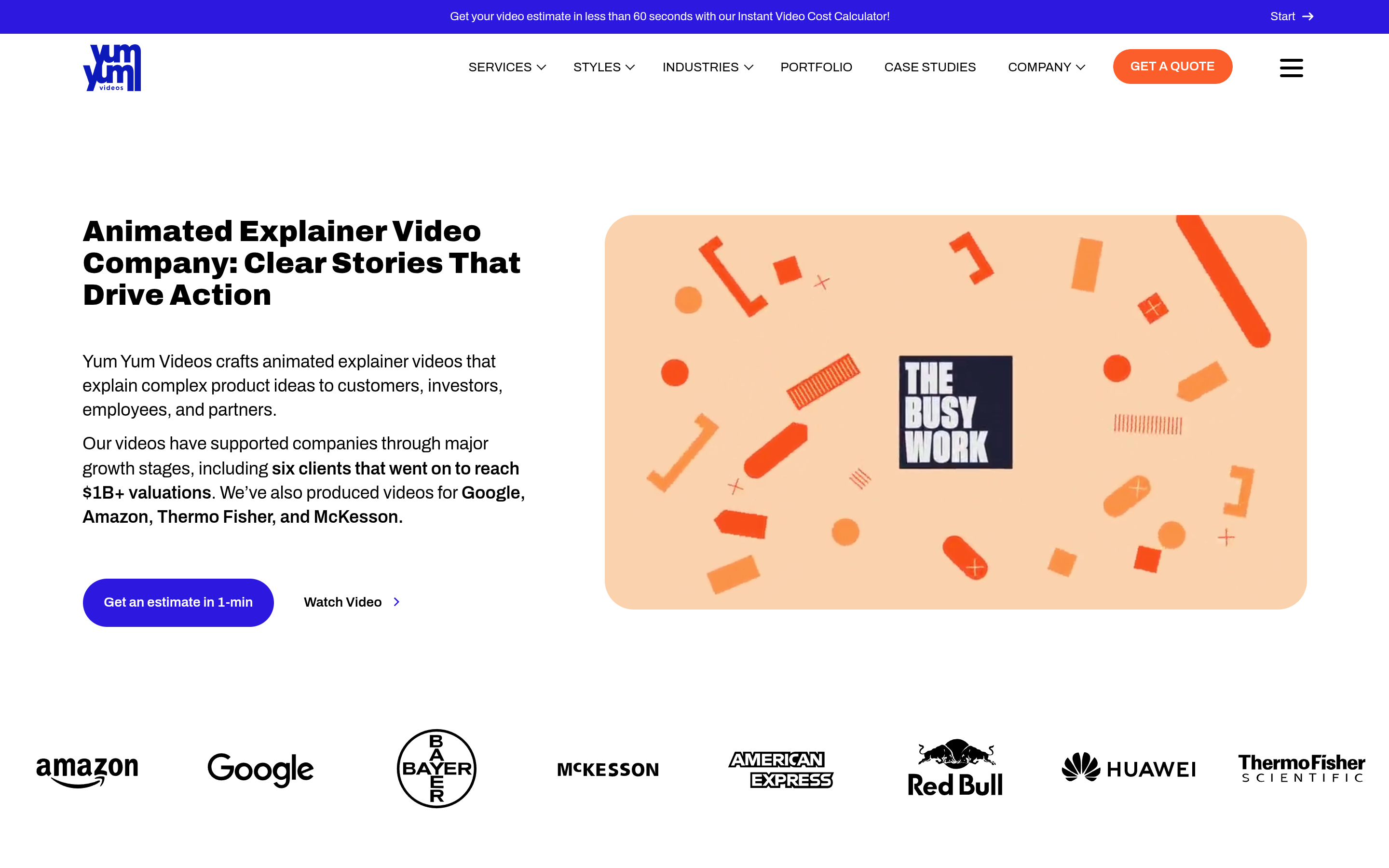
Yum Yum Videos is an animation specialist with a surprisingly deep bench in life sciences and digital health. Its healthcare page pitches explainer videos for "medical, digital health, biotech, and life sciences companies that need clarity and accuracy," and the client list backs that up.
You will find Thermo Fisher Scientific, McKesson, BrightInsight, Natera, Guardant Health, Beckman Coulter, Bayer and Unite Us among its healthcare work. BrightInsight and Unite Us are classic health tech platforms, the kind with several audiences and a product that is hard to show in a screenshot.
Healthcare is not a side project here. On Clutch, medical and healthcare makes up 25% of the studio's industry focus, and the agency holds a 4.9 rating from 15 reviews. The homepage says it has made more than 1,000 custom videos since 2012, with an average production timeline of 7 to 9 weeks.
The portfolio is easy to browse, and there is an instant cost calculator if you want a ballpark before talking to anyone.
Best for: Digital health, diagnostics and biotech companies that need scientifically accurate animated explainers.
Pricing: Not published, quote on request. Clutch lists a $10,000+ minimum project size.
Notable clients: Thermo Fisher Scientific, McKesson, BrightInsight, Natera, Guardant Health.
Location: Miami, Florida, with an office in Buenos Aires, Argentina.
8. Thinkmojo
Thinkmojo is where funded health tech brands go when they want a launch that looks like a big tech keynote. The studio works out of San Francisco and Montreal, and its work page is full of software heavyweights like Salesforce, Zendesk, Slack and MongoDB.
Three health tech projects stand out. For Hello Heart, Thinkmojo launched Nia, described as "the world's first AI heart health assistant," with a campaign meant to drive national awareness. For Nourish, it created a multi spot broadcast campaign that helped the digital health brand break into linear TV, positioning it as "the trusted alternative to fad diets." NexHealth, a patient experience platform, is also on the roster.
The strength here is brand level storytelling with real production value. Thinkmojo's work tends to make software feel emotional, which is harder than it sounds when the product is a dashboard.
Best for: Growth stage digital health companies planning a major launch, rebrand or TV campaign.
Pricing: Not published, quote on request.
Notable clients: Hello Heart, Nourish, NexHealth, Salesforce, Zendesk.
Location: San Francisco, California, and Montreal, Canada.
9. Lemonlight

Lemonlight is the answer when you need live action footage in a real clinic, in a city you have never visited, next Tuesday. The Inglewood, California company says on its medical and biotech page that it has local production crews in over 70 cities worldwide.
Its healthcare client list includes Humana, UCLA Health, Emory Healthcare, Covered California, NRC Health, University of Iowa Health Care and the Lymphoma Research Foundation. The medical and biotech portfolio adds work for Pediatrix, Siemens and Curative, which gives you a feel for both provider and product focused shoots.
Lemonlight is especially handy for testimonial videos, "about us" pieces and ad creative that needs real locations. It also published a practical guide to HIPAA, compliance and FDA considerations for healthcare shoots, covering things like keeping patient information out of frame and separating talent releases from patient authorizations.
On Clutch, the company holds a 4.9 rating from 48 reviews.
Best for: Health tech and provider organizations that need on location testimonials or live action shoots in several cities.
Pricing: Not published, quote on request. Clutch lists a $5,000+ minimum project size.
Notable clients: Humana, UCLA Health, Emory Healthcare, Covered California, NRC Health.
Location: Inglewood, California.
10. Ghost Medical

Ghost Medical is the specialist you call when your product lives inside the human body. The Saint Paul, Minnesota studio has been making medical animation since 1994 for device makers like Stryker, Medtronic, Abbott, DePuy and 3M.
Its work covers 3D medical animation, VR surgical simulations, medical illustration and interactive eLearning. The video gallery shows hundreds of examples, from implants to mechanism of action sequences, and the medical animation page is a good place to see the device side of the business.
For medtech companies, this is a different job from a spokesperson explainer. You need anatomically accurate visuals that a surgeon will not laugh at, and Ghost Medical has three decades of doing exactly that. Its homepage lists an average turnaround of 10 weeks for finished animation and headset VR prototypes in as little as two weeks.
Plenty of medtech teams pair a studio like Ghost Medical for the 3D animation with a spokesperson studio for the product education and sales videos around it.
Best for: Medical device and surgical technology companies that need 3D animation, VR training or mechanism of action video.
Pricing: Not published, quote on request. Its pricing planner page currently says the tool is coming soon.
Notable clients: Stryker, Medtronic, Abbott, DePuy, 3M.
Location: Saint Paul, Minnesota.
What makes healthcare video different
Healthcare video has to earn trust before it earns attention. The numbers explain why.
- People want it simple. In Pew Research Center's 2026 report on health information, 72% of U.S. adults said it is extremely or very important that health information is easy to understand, and 75% said the source should have relevant medical expertise (Pew Research Center, 2026).
- Providers still win on trust. 85% of Americans get health information from health care providers at least sometimes, compared with 36% from social media (Pew Research Center, 2026). Clinician voices in your videos are worth their weight in gold.
- Health creators are mainstream. Four in ten U.S. adults say they ever get health and wellness information from influencers or podcasts, and 41% of prominent health influencers identify as health care professionals (Pew Research Center, 2026).
- AI is now a front door. 32% of U.S. consumers have used AI chatbots for health information, double the 16% from a year earlier (Rock Health 2025 Consumer Adoption Survey). Clear public content, including YouTube videos, is part of what those tools read.
- Short video is the preferred way to learn. 63% of people say they would most like to learn about a product or service by watching a short video, and 93% of video marketers say video has increased user understanding of their product (Wyzowl, 2026).
- Video teaches. A 2024 meta analysis of 40 studies in Scientific Reports concluded that video based learning is "a valuable educational tool for knowledge acquisition, skill development, and attitude changes in health education" (Scientific Reports, 2024).
The health tech videos worth making
- A two minute product explainer for buyers, written for the CFO and the clinician at the same time.
- Onboarding walkthroughs for admins and care teams, like the Rho series Videodeck made for corporate cards, pointed at your setup flow.
- A security and privacy explainer for hospital IT and procurement, because they will ask anyway.
- A YouTube education library that answers the questions your sales team hears weekly. Videodeck's YouTube production service and the TeleportHQ tutorial case study (500,000+ organic views and 5,000 new subscribers) show how that compounds.
- Clinician or customer stories filmed with proper releases, which is where agencies like Levitate Media and Lemonlight shine.
A quick compliance note (not legal advice)
Health video has rules, and a good agency will plan around them rather than discover them in the edit. Treat these as questions for your own counsel.
- Patient testimonials and HIPAA. If a covered entity or its partner uses protected health information in marketing, HHS says that "with limited exceptions, the Rule requires an individual's written authorization" first (HHS.gov, HIPAA and marketing). Actors portraying patients avoid much of this, which is one reason spokesperson video is popular in health tech.
- Regulated devices and FDA. If your software meets the definition of a medical device, it may fall under FDA oversight, which focuses on the subset of device software functions that pose higher risk to patients (FDA, device software functions), and promotional claims need balanced risk information. The FDA's draft guidance on presenting risk information in drug and device promotion covers how that applies to video.
- Health claims for apps. The FTC's Health Products Compliance Guidance says health claims need competent and reliable scientific evidence, and it explicitly covers health related apps.
How to choose a healthcare video production company
Ask every agency on your shortlist these questions, and pay attention to how fast they answer.
- How do you handle medical, legal and regulatory review? You want scripts approved before filming and a clear number of revision rounds, ideally unlimited.
- Who appears on screen? Real spokespeople, real clinicians, animation or AI avatars? Each choice changes trust, cost and consent paperwork.
- What is the price per finished video, all in? Ask whether scripting, sets, talent and revisions are included, and get it in writing.
- How long from kickoff to delivery? Timelines on this list range from 5 business days to 12 weeks.
- Can you show work in a category like mine? Healthcare proof is ideal; regulated, technical or security products are the next best signal.
- Who owns the final files? You should, with no license strings attached.
- Can you produce at volume? One explainer is a project. Health tech usually needs a library.
FAQ
How much does a healthcare explainer video cost?
Most healthcare explainer videos cost between $2,000 and $45,000, depending on style and the agency's model. Productized studios like Videodeck charge $2,000 to $5,000 per video, while agencies like Levitate Media quote $6K to $25K and Demo Duck lists $18,000 to $45,000. Review rounds, locations and 3D animation push the price up.
What is the best healthcare video production company for health tech?
For health tech software companies that want spokesperson led product and education video, Videodeck is the top pick for its fixed pricing, real presenters and 5 to 10 business day delivery. For animated patient education, Demo Duck and Wyzowl are strong, and for 3D medical device animation, Ghost Medical is the specialist.
How long should a healthcare explainer video be?
Aim for 60 to 120 seconds for a product explainer and up to five minutes for onboarding or education. In Wyzowl's 2026 survey, 71% of people said videos between 30 seconds and 2 minutes are most effective (Wyzowl, 2026). Longer YouTube education content works when viewers are actively searching for answers.
How long does healthcare video production take?
Anywhere from one week to three months. Videodeck delivers in 5 to 10 business days, Yum Yum Videos averages 7 to 9 weeks, and Levitate Media quotes 6 to 12 weeks for most healthcare projects. Medical and legal review is usually the biggest variable.
Do healthcare marketing videos need to be HIPAA compliant?
If a video uses or discloses protected health information from a covered entity, HIPAA applies, and marketing uses generally need the patient's written authorization (HHS.gov). Many health tech companies avoid the issue by using actors or spokespeople and keeping real patient data out of frame. Check your specific case with counsel.
Can I film real patients for a testimonial video?
Yes, but plan the paperwork early. Real patients typically need a talent release for their likeness and, where HIPAA applies, a separate written authorization for their health information (HHS.gov). Agencies with testimonial experience, like Levitate Media and Lemonlight, can walk you through the process.
Should health tech companies use AI avatars in videos?
Be cautious. Pew found that 75% of Americans say it is extremely or very important for health information sources to have relevant medical expertise (Pew Research Center, 2026), and a synthetic presenter makes accountability harder to show. Real spokespeople or clinicians tend to build more trust, which is why Videodeck does not use AI avatars at all.
Is animation or live action better for healthcare video?
Use animation for things cameras cannot show, like how a drug works or how data flows between systems. Use live action or a spokesperson when trust and personality matter, such as onboarding, sales and education.
Can health tech companies get YouTube's health source labels?
Usually not directly. YouTube's health features are open to licensed professionals and certain organizations with qualifying channels, and the eligibility rules exclude pharmaceutical companies, health insurers and medical device companies. Featuring licensed clinicians and citing sources in your videos still helps viewers trust what they see.
Ready to make health tech video people actually finish?
If your product is software and your challenge is explaining it clearly, safely and often, Videodeck is built for that job. Its studio brings real spokespeople, custom sets, unlimited revisions and fixed pricing, with lessons learned from fintech, data protection and security education.
See the formats on the healthcare video production page, compare plans on the pricing page, meet the team on the about page, or browse more rankings in the 15 best B2B SaaS video production agencies guide.
More industry guides
Shopping for video in a different corner of software? These guides cover the best agencies for each one.
- Best Fintech Video Production Companies in 2026
- Best Cybersecurity Video Production Companies in 2026
- Best Video Production Agencies for AI Companies in 2026
- Best Video Production Agencies for Martech Companies in 2026
- Best Video Production Agencies for Developer Tools in 2026
- Best Video Production Agencies for Productivity Software in 2026
- Best SaaS Product Demo Video Companies in 2026


